Why Choose Hand Held Hair Blow Dryers for Global Buyers?
The global hair dryer market continues to expand, but published estimates vary. Fortune Business Insights valued it at approximately USD 9.3 billion in 2023. Grand View Research reported a different estimate, reflecting different market definitions and regional coverage. That inconsistency deserves attention. Still, both reports indicate steady demand for practical, personal-care appliances.
A Hand Held Hair Blow Dryer fits changing household routines. It can dry short hair beside a hotel mirror or style thick hair before a morning commute. Its compact body supports easier storage, shipping, and retail display. For global buyers, portability also matters during travel and professional use. However, low weight should not mean weak airflow, unstable switches, or excessive surface heat.
Technical decisions require more than attractive packaging. Buyers should examine motor durability, airflow levels, heat settings, noise performance, plug compatibility, and available safety certifications. The IEC 60335-2-23 standard provides an important reference for household hair-care appliances. Regional compliance still requires separate verification.
Dr. Tim Moore, former Chief Technology Officer at ghd, has warned: “Hair is weaker when wet, so excessive heat can cause damage.” That insight connects engineering with real user experience. A reliable dryer should offer controlled heat, not simply maximum temperature.
The best choice is rarely the cheapest one. It is the model that balances performance, safety, service support, and honest specifications. Some buyers may still overvalue wattage. That is a useful mistake to reconsider.
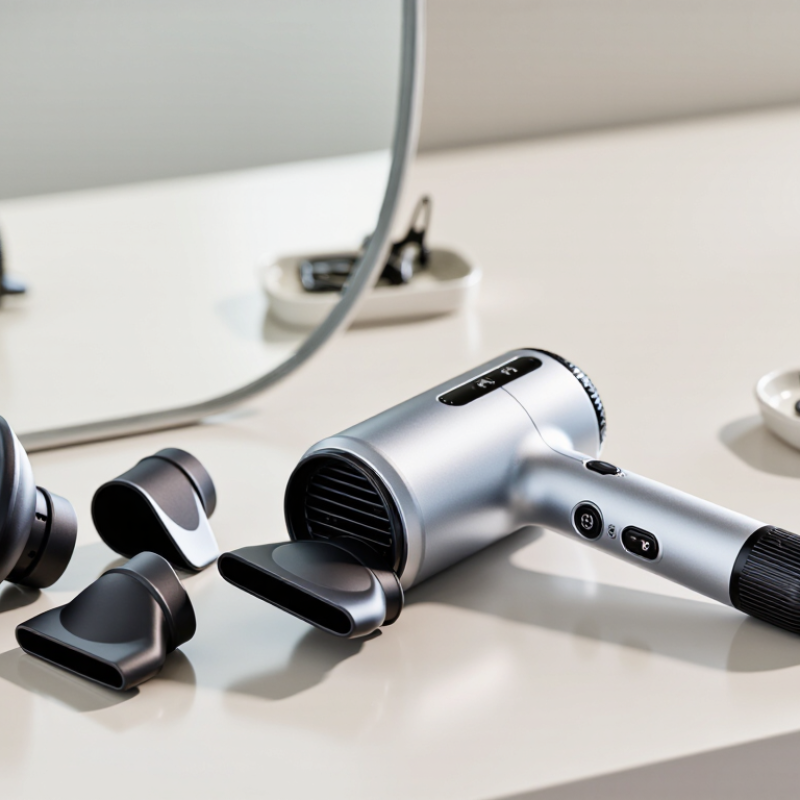
A handheld hair blow dryer is a compact electrical appliance that dries and shapes hair with controlled airflow. Inside, a motor turns a fan, drawing air through the rear filter. The air then passes across a heating element before leaving through the front outlet. Users adjust temperature, speed, and sometimes a cool-shot setting. The result depends on airflow strength, heat distribution, and the distance from the hair.
A narrow nozzle concentrates air for smoother styling and more precise control. A diffuser spreads airflow, helping preserve natural waves and curls. Many models include removable filters, which make cleaning easier and support stable performance. In practical use, holding the dryer too close can create excessive heat on one area. Moving it continuously is safer and usually produces more even drying. The process is simple, but not careless.
For global buyers, the operating voltage and frequency require careful checking before purchase. A dryer designed for one electrical system may need a compatible version elsewhere. Plug shape, thermal protection, cord quality, and tested safety documentation also deserve attention. These details are easy to overlook. That small mismatch matters. Product specifications should state power, airflow controls, heat settings, and filter design clearly. Some advertised features sound impressive but offer limited value without reliable temperature control. A professional evaluation should consider actual usability, maintenance needs, packaging protection, and the user’s hair type. The most suitable dryer is not always the most powerful one.
Global buyers often prefer handheld hair blow dryers because they fit different routines, spaces, and voltage requirements. A compact body is easier to pack, store, and operate near a small bathroom mirror. Many models offer adjustable heat and speed settings for straight, wavy, or textured hair. That flexibility matters in households with several users. It also helps salons manage quick drying between appointments. Weight matters more than product photos suggest. After several minutes, a heavy handle can strain the wrist.
Buyers usually check voltage compatibility before placing international orders. A suitable plug alone does not guarantee safe operation. They also examine wattage, airflow strength, noise levels, and available heat controls. Removable filters can simplify cleaning and support longer service life. Concentrator nozzles help shape airflow, while diffusers may reduce harsh airflow on curls. However, attachments can loosen or become awkward during regular use. Practical testing remains important.
Reliability also influences purchasing decisions. Buyers may request inspection records, clear operating manuals, protective packaging, and responsive after-sales support. Consistent performance across production batches builds more trust than attractive specifications. Some purchasers focus too heavily on maximum power. That choice can increase heat, noise, and energy use without improving drying results. A quieter motor may feel more valuable in apartments, hotels, and shared spaces. Even so, no single design suits every market, hair type, or household.
Global buyers need more than strong airflow. In product evaluations, voltage compatibility is often the first practical concern. A dryer should support the target market’s electrical system and include a suitable plug option. Wattage also matters. High power may shorten drying time, but it can increase heat, noise, and energy use. Adjustable temperature and speed settings help users manage different hair textures and local climates. A cool-shot function is useful for styling and reducing excessive heat exposure.
Weight and grip shape influence daily comfort. A compact dryer can suit hotel guests, salon workers, and home users with limited storage. Removable filters make cleaning easier, especially in dusty regions. Overheat protection adds a valuable safety layer, but buyers should still review testing documents and operating instructions. Attachments also need careful selection. A concentrator supports precise styling, while a diffuser may better serve curly or textured hair. One feature rarely fits every market.
Tips: Check voltage, plug type, noise level, warranty support, and replacement-part access before ordering. Ask for airflow and temperature test data. Packaging should resist moisture and rough transport. I have seen buyers focus on appearance and overlook grip fatigue. That mistake becomes obvious after repeated use. Reflect on the real user, not only the product photograph.
Hand held hair blow dryers appeal to global buyers because they fit small bathrooms, travel bags, and professional stations. Yet compact size does not guarantee strong performance. Compare airflow volume, heat settings, motor durability, and drying time. A useful test measures damp hair after several minutes, not only the advertised wattage. High wattage may produce heat quickly, but it can also increase energy use and discomfort.
Safety deserves equal attention. Look for overheating protection, insulated housing, secure switches, and a well-designed power cord. Buyers should verify voltage, frequency, plug type, and required local compliance before importing. A dryer used in a bathroom also needs suitable moisture protection. Never judge safety by appearance alone. I once underestimated cord flexibility; a stiff cable made daily handling frustrating.
Tips: Compare airflow at each heat setting. Check the noise level near ear height. Inspect the filter for easy cleaning. Confirm replacement parts and warranty support. Test the handle with wet hands only when the product instructions allow it. Portability involves more than weight. Measure the folded or stored size, examine grip balance, and check whether the concentrator nozzle stays attached during movement. A lightweight dryer may feel weak, while a powerful model may become tiring after ten minutes. Buyers should record these trade-offs instead of relying on attractive specifications.
How should buyers compare performance, safety, and portability? This comparison uses typical specification ranges found across handheld dryer categories. Higher scores indicate stronger suitability for the corresponding buying priority.
Key takeaway: High-power models generally deliver faster drying, while dual-voltage travel models improve portability and international usability. Buyers should also verify overheat protection, plug compatibility, voltage requirements, and total product weight before purchasing.
Importers should inspect the dryer as a working product, not just a catalog image. Confirm wattage, voltage, frequency, plug type, airflow settings, and temperature controls for the target market. A 220–240V model may not suit every destination. Request a production sample and test it for heating time, noise, grip comfort, and cord flexibility. Small details often reveal larger quality problems.
Safety documentation needs careful review. Ask for reports covering electrical safety, electromagnetic compatibility, and applicable market requirements. Check that each report matches the exact model, rated power, and factory address. Do not rely on a generic certificate. It may describe an older design. Verify thermal protection by observing whether the unit stops or cools after restricted airflow testing. This test should follow safe, documented procedures.
The motor, heating element, and switch should receive clear inspection standards. Ask how many units are checked per production batch and how defects are recorded. Packaging also matters: a loose nozzle or cracked housing can result from poor inner protection. Confirm carton strength, drop-test expectations, spare-part availability, minimum order quantity, and realistic lead times. A low unit price can still be expensive. I would also calculate landed cost, including freight, duties, testing, and possible rework. Supplier answers should be specific, written, and consistent across samples, documents, and mass production.
The dryer must match the destination market’s voltage and frequency. Check the plug type too. A mismatch can prevent safe operation.
Not always. Higher wattage may reduce drying time, but it can increase heat, noise, and energy use. Compare real drying tests, not numbers alone.
Adjustable heat and speed settings offer better control. A cool-shot button can reduce prolonged heat exposure. Different users need different choices.
Weight, grip shape, and balance matter during repeated use. A stiff cord can make handling annoying. Ten minutes can reveal more than a product photo.
Look for overheating protection, insulated housing, secure switches, and a suitable power cord. Review testing documents and instructions. Appearance is not proof.
Measure airflow at each heat setting. Test drying time on damp hair for several minutes. Check noise near ear height, not across a quiet room.
A concentrator supports focused styling. A diffuser may suit curly or textured hair. One attachment rarely serves every market equally well.
Measure the stored size, handle balance, and attachment security. A compact dryer may fit a travel bag but feel weak. Lightweight is not always comfortable.
Removable filters simplify cleaning, especially in dusty areas. Replacement parts and warranty support can reduce long-term frustration. These details are easy to overlook.
Packaging should resist moisture and rough handling. Buyers should confirm warranty access and replacement-part availability. I would not rely on appearance alone.
A Hand Held Hair Blow Dryer is a compact electrical appliance that uses a motor-driven fan to move air across a heating element, helping users dry and style hair efficiently. Its handheld design offers direct control, making it suitable for households, salons, hotels, travel, and professional distribution in different regions. Global buyers often prefer this format because it combines convenience, flexible handling, and relatively simple storage. Important features may include adjustable heat and speed settings, a cool-air option, ergonomic grip, suitable power ratings, detachable accessories, noise control, and easy cleaning.
When comparing products, buyers should evaluate drying performance, airflow stability, temperature consistency, energy efficiency, durability, electrical protection, and portability. Importers should also confirm that the product matches the destination market’s voltage, plug configuration, labeling, packaging, warranty terms, and required safety documentation. Before placing an order, they should review samples, production capacity, quality-control procedures, customization options, shipping requirements, and after-sales support. A careful comparison helps buyers select a reliable product that meets user expectations across multiple markets.

KangRoad Electrical