A Hair Dryer With Spinning Brush combines airflow, heat, and a rotating styling barrel in one handheld tool. As the brush turns, its bristles guide damp hair while warm air removes moisture. The result can resemble a salon blowout, but technique still matters. It is not magic. Hair texture, section size, heat level, and drying time all affect the finish. Fine hair may need gentler airflow, while thick hair often requires smaller sections and more patience.
In practical use, the tool can smooth strands, create soft curls, or add lift near the roots. Its rotating brush may reduce the need for a separate round brush and dryer. However, convenience does not remove heat-related risks. Excessive temperature can leave hair dry, rough, or fragile. Start gently. Keep the brush moving. Avoid pulling wet hair aggressively, because saturated strands stretch more easily.
A common assumption is that faster rotation always produces better volume. That idea deserves a closer look. Results vary, and users may need several attempts to coordinate rotation, airflow, and hand movement. This guide will explain how a Hair Dryer With Spinning Brush works, who may benefit from it, and where its limits appear. It will also discuss barrel sizes, heat settings, attachments, cleaning, and safe styling habits. Reliable advice should combine manufacturer guidance with basic hair-care knowledge. The perfect finish is not guaranteed, and that honest limitation matters.
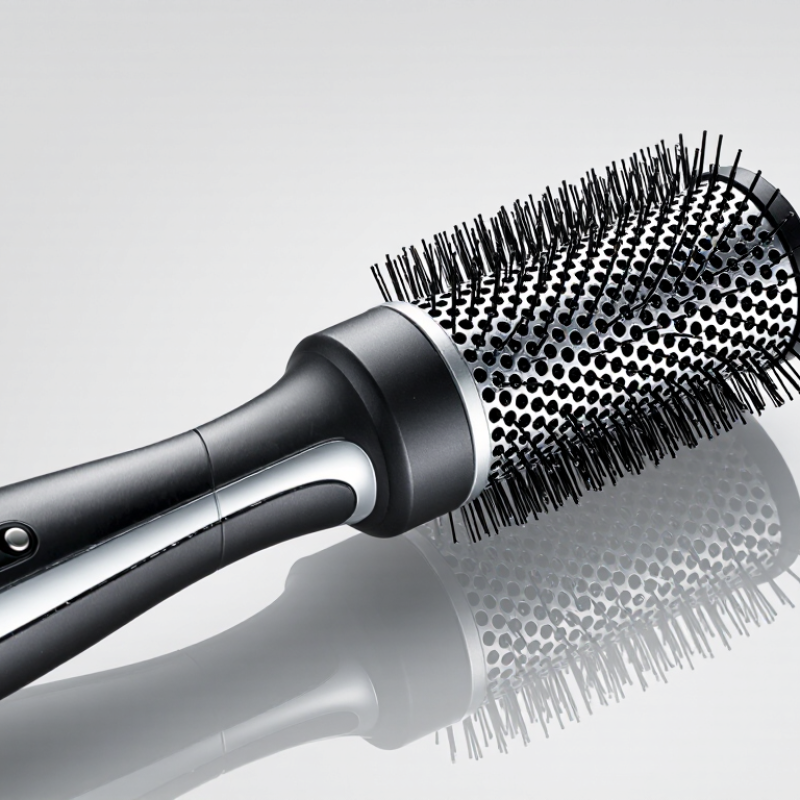
What Is a Hair Dryer With Spinning Brush?
A hair dryer with a spinning brush combines airflow, heat, and a rotating barrel in one styling tool. Its brush pulls through damp hair while warm air removes moisture. The barrel rotates clockwise or counterclockwise, helping shape ends and create root lift. It is not simply a curling iron. Its main function is simultaneous drying and brushing.
The tool works best on towel-dried hair, not soaking-wet strands. Users guide small sections from roots to ends, while the brush adds tension and movement. Some models provide multiple heat and rotation settings. That matters. The U.S. Department of Energy reports that common hair dryers typically use 1,200 to 1,875 watts. Power affects drying speed, but higher heat does not guarantee better styling.
Industry reports often group these tools within the broader hair-styling appliance market. Grand View Research identifies rising demand for multifunctional styling devices, although its market figures do not isolate spinning-brush dryers. This distinction is important for reliable interpretation. The American Academy of Dermatology recommends using the lowest effective heat and limiting exposure time. In practice, excessive heat can leave hair rough, especially when sections are too thick. The term “damage-free” is therefore misleading. A rotating brush can improve control, but it cannot correct poor sectioning, excessive tension, or unsuitable heat. It is useful. Not effortless.
This definition-based chart shows the core functions of a hair dryer with a spinning brush. The device combines heated airflow with a motorized rotating brush, allowing hair to be dried, smoothed, shaped, or given volume during brushing. The values indicate whether each function is an essential part of the product concept, not a performance rating.
A hair dryer with a spinning brush combines airflow, controlled heat, and mechanical rotation. Its main parts include a motor, heating coil, fan, rotating barrel, bristles, speed controls, and a heat shield. The fan pulls air through the rear filter. Then, the heating coil warms that air before it exits around the brush.
The rotating barrel usually connects to a small geared motor. When activated, the motor turns the brush clockwise or counterclockwise. As the bristles grip a damp section, rotation pulls hair around the barrel. Warm airflow follows the strand, helping shape volume, bends, or smoother ends. The user must guide the tool slowly. Moving too fast can leave the roots damp.
Heat and airflow need balance. A 2024 Grand View Research analysis estimated the global hair dryer market at about USD 9.3 billion in 2023. Allied Market Research also projects continued growth in the wider hair styling tools market. These figures suggest strong demand, but they do not prove every rotating design performs equally well.
In practical use, the brush feels different near the scalp. Fine hair may need lower heat and slower rotation. Thick hair may require smaller sections. The brush can still snag hair if sections are too large. That weakness matters.
Ceramic or tourmaline surfaces may distribute heat more evenly, but results depend on airflow, moisture, and technique. Users should inspect bristles, filters, and cord connections regularly. A clever mechanism still needs careful handling.
A spinning brush hair dryer combines warm airflow with a rotating round brush. It dries hair while shaping volume, bends, or soft waves. The brush usually spins in both directions. This helps guide hair away from the face or toward it. Use it on towel-dried hair, not soaking-wet hair. Excess water makes styling slower and increases heat exposure.
Gently squeeze water from your hair with a towel. Apply a heat-protective product evenly. Divide your hair into small sections, about two inches wide. Clip the unused sections away. Choose a medium heat setting and moderate airflow. Place the brush beneath one section near the roots. Move it slowly toward the ends while the brush rotates. Keep the dryer moving. Holding it still can create unwanted heat on one area. Roll the ends inward or outward, depending on your preferred shape. Release the section after it feels mostly dry. Let it cool briefly before touching it. This improves the style’s hold. I still find that rushing the final sections creates uneven volume.
Tips: Start with the lower layers. Use smaller sections for thicker hair. Reduce heat near the ends, because they dry quickly. If the brush catches, stop the rotation and remove it gently. Do not forcefully pull. Practice with cool air between sections. It may feel slower, but it reveals the shape without adding more heat. Avoid using the tool near water, and follow its safety instructions carefully.
What Is a Hair Dryer With Spinning Brush?
A hair dryer with a spinning brush combines airflow, heat, and brushing in one tool. Its round barrel rotates while drying, helping shape hair with less wrist movement. I have found that smaller barrels create tighter waves, while larger barrels make softer volume. A fixed brush attachment offers more control, but it requires active hand movement. Paddles smooth longer hair quickly and reduce the chance of uneven tension.
Settings affect the final result more than many users expect. Low heat suits fine, damaged, or color-treated hair. Medium heat works well for damp, medium-textured hair. High heat dries thick sections faster, but it can leave ends rough. Use the cool setting near the end to help the shape last longer. Airflow direction also matters. Moving from roots toward ends usually creates a smoother surface.
The result depends on preparation and technique. Hair should be towel-dried, not dripping wet, before styling. Divide it into sections about two inches wide. Keep the brush moving, especially around the fringe and ends. I once used high heat for extra volume, but the roots became flat later. That assumption was wrong. More heat does not always create better lift. Fine hair may need slower rotation, while coarse hair may need smaller sections. The finish can be polished, curved, wavy, or simply straighter, depending on barrel size, moisture level, and tension.
What Is a Hair Dryer With Spinning Brush?
A hair dryer with a spinning brush combines airflow, heat, and rotating bristles in one tool. The brush gently pulls hair while directing warm air along each section. Used carefully, it can smooth damp hair and create soft bends without a separate round brush. It is not suitable for soaking-wet hair. Remove excess water first, because prolonged heat may weaken the cuticle and increase frizz.
Safety starts with distance and movement. Choose a lower temperature for fine, bleached, or fragile hair. Keep the brush moving, especially near the roots and ears. Never wrap a section tightly around the barrel. Stop if you notice pulling, scalp discomfort, smoke, or a burning smell. Check the cord and air inlet before use, and keep the tool away from water. Heat protectant can reduce damage, but it cannot cancel excessive heat. I sometimes rush the last section. That is exactly when caution slips.
Maintenance is simple but easy to neglect. Unplug the tool, let it cool, and remove trapped hair after every use. Wipe the housing with a slightly damp cloth. Never immerse it. Clear dust from the air inlet regularly so airflow stays steady. Fine hair usually needs less heat and shorter passes, while thick hair may need smaller sections. Curly hair can benefit from low heat and controlled tension, but tight curls may lose definition. Results also depend on technique, humidity, and hair condition.
| Data Dimension | Key Information | Practical Details | Safety or Care Consideration |
|---|---|---|---|
| Product Definition | A hair dryer with a spinning brush is a heated styling tool that combines airflow, a rotating brush, and heat in one device. | The brush rotates automatically while directing warm air through or around the bristles, helping dry, smooth, curl, or add volume. | It should be used as a styling aid rather than as a substitute for careful heat protection. |
| Main Styling Functions | Drying, smoothing, shaping, root lifting, and creating soft curls or bends. | Rotation can usually be controlled in two directions, while separate heat and speed settings help adjust the styling process. | Use lower heat and slower airflow when working near the scalp, hairline, or fragile ends. |
| Best Hair Length | Most suitable for short, medium-length, and long hair, depending on brush diameter and section size. | Smaller barrels generally provide more control for shorter hair; larger barrels are often more efficient for longer hair and loose volume. | Do not wrap large sections around the brush, because uneven drying can increase styling time and tangling. |
| Straight Hair | Generally well suited for smoothing, polishing, and adding movement. | Work with small sections and guide the brush from the roots toward the ends for a smoother finish. | Keep the tool moving instead of holding hot air on one area for an extended period. |
| Wavy Hair | Can help stretch waves, reduce visible frizz, and create a rounded blow-dry shape. | Use moderate heat and finish with a cooler setting when available to help set the style. | Excessive brushing can disrupt the natural wave pattern and may increase frizz. |
| Curly Hair | May be useful for stretching curls or creating a smooth blowout, but it may not preserve natural curl definition. | Detangle gently first and style in small sections. A separate diffuser is generally more suitable for preserving curls. | Do not force the brush through tight tangles. Stop and detangle the section to reduce pulling and breakage. |
| Thick or Coarse Hair | Can be used, but drying and styling may require smaller sections and more time. | Remove excess moisture with a towel or initial low-heat drying before using the rotating brush for shaping. | Using very high heat on dense hair can increase the risk of dryness and heat damage. |
| Fine or Thin Hair | Often suitable for adding root volume and light movement. | Choose a low or medium heat setting and avoid holding the brush directly at the roots for too long. | Fine hair can be more vulnerable to heat and mechanical stress, so use light tension and short passes. |
| Damaged, Bleached, or Chemically Treated Hair | May be used cautiously, but the hair may be more sensitive to heat, pulling, and repeated styling. | Apply a heat-protective product suitable for the hair type and use the lowest effective temperature. | Avoid daily high-heat styling and stop if the hair feels unusually dry, rough, or brittle. |
| Recommended Starting Condition | Hair should be damp rather than soaking wet before styling. | Gently blot or towel-dry first. Many users can begin when the hair is partially dry, reducing the total heat exposure. | Do not use the tool on dripping-wet hair unless the operating instructions specifically allow that use. |
| Heat Protection | Heat-protective products can help reduce the effects of thermal exposure when applied according to their instructions. | Distribute the product evenly, especially through the mid-lengths and ends, and allow excessive wetness from the product to settle before styling. | Heat protection does not make hair immune to damage; temperature, duration, and frequency still matter. |
| Safe Operating Distance | The brush should be kept moving through the hair rather than pressed against one spot. | Maintain a comfortable distance from the scalp and skin, and avoid direct contact between hot surfaces and the ears, neck, or face. | Stop immediately if the device becomes unusually hot, smells of burning, or causes discomfort. |
| Tangle Prevention | Hair can wrap around a rotating brush if sections are too large or the tool is used too close to tangled hair. | Detangle first, use manageable sections, and release the rotation before removing the brush from the hair. | Never pull forcefully. Turn the device off and carefully unwind the hair if it becomes caught. |
| Electrical Safety | The tool should be used with a dry electrical outlet and according to its voltage requirements. | Keep the cord away from hot surfaces, water, and sharp edges. Unplug the tool after use. | Do not use it near a bathtub, sink, or other water source, and do not handle the plug with wet hands. |
| Air Intake Cleaning | Dust, lint, and hair can restrict airflow through the intake filter or grille. | After unplugging and cooling the device, remove visible debris with a soft, dry brush or follow the cleaning instructions. | A blocked intake can reduce performance and may cause overheating. |
| Brush Cleaning | Loose hair and styling-product residue can collect around the bristles and rotating mechanism. | Remove trapped hair regularly and wipe the brush with a slightly damp cloth only when the tool is unplugged. | Do not immerse the motorized device in water or use abrasive cleaners. |
| Storage | Proper storage helps protect the cord, brush, and housing from damage. | Allow the device to cool completely, store it in a dry place, and avoid tightly bending or wrapping the cord around the body. | Keep it away from children and flammable materials while it is hot or cooling. |
| Typical Benefits | Combines several styling steps and can help create a smooth, rounded finish with less manual coordination. | May be convenient for users who find coordinating a separate brush and dryer difficult. | Convenience does not eliminate the need for sectioning, heat control, and regular cleaning. |
| Potential Limitations | It may be less effective for very wet, highly tangled, extremely dense, or tightly coiled hair without preparation. | Results depend on brush size, hair condition, technique, and the tool's airflow and heat settings. | Repeated high heat or strong tension can contribute to dryness, breakage, or split ends. |
| Suitable User Profile | Suitable for people who want to dry and shape hair at the same time and prefer a guided styling motion. | It can be especially convenient for creating smooth volume, soft bends, or a rounded blow-dry finish. | Users with scalp sensitivity, severe hair damage, or difficulty controlling rotating tools should use extra caution or seek professional advice. |
A fan pulls air through a rear filter. A heating coil warms it before it exits around rotating bristles. The motor turns the barrel clockwise or counterclockwise, shaping damp hair with airflow and tension.
No. Towel-dry hair until it is damp, not dripping. Soaking-wet hair needs longer heat exposure, which may increase frizz and weakness. Less moisture helps.
Low heat suits fine, fragile, bleached, or color-treated hair. Medium heat works for moderately damp hair. High heat dries thick sections faster but may roughen the ends. More heat is not always better.
Create sections about two inches wide. Use smaller sections for thick hair. Guide the brush slowly from roots toward ends. Moving too quickly can leave roots damp.
Smaller barrels usually create tighter waves or bends. Larger barrels create softer volume and curved ends. Results also depend on moisture, tension, airflow, and humidity. The same barrel may behave differently tomorrow.
Yes, especially when sections are too large or wrapped tightly. Keep the brush moving near the scalp, ears, fringe, and ends. Stop if you feel pulling, discomfort, smoke, or a burning smell.
Use controlled tension and finish with cool airflow. Moving air from roots toward ends can create a smoother surface. Excessive heat may give quick volume, but the shape can later fall flat.
Unplug it and let it cool before removing trapped hair. Wipe the housing with a slightly damp cloth. Clear dust from the air inlet regularly. Never immerse the tool in water. This step is easy to forget.
A Hair Dryer With Spinning Brush is a versatile styling tool that combines airflow, heat, and a rotating brush to dry, smooth, shape, and add volume to the hair at the same time. Its main parts usually include a motor, heating element, air vents, control buttons, and a spinning barrel or brush. As the brush rotates, it gently guides sections of hair while warm air helps create curls, waves, lift, or a straighter finish.
To use it, begin with towel-dried, detangled hair and select a suitable heat and rotation setting. Divide the hair into manageable sections, place the brush near the roots, and move it slowly toward the ends while allowing the barrel to turn. Different brush sizes, airflow levels, and rotation directions can produce varied styling results. For safer use, avoid excessive heat, keep the tool moving, and never use it on soaking-wet hair unless designed for that purpose. Regularly remove trapped hair and dust, and choose settings appropriate for your hair’s thickness and condition.

KangRoad Electrical