Rechargeable hair dryers have moved beyond novelty, but they are not all designed for the same job. In 2026, shoppers can compare compact travel models, everyday cordless dryers, and higher-capacity units built for longer styling sessions. A “Recharge Hair Dryer” may suit a quick fringe refresh or a weekend trip, yet still struggle with thick, wet hair. The difference often comes down to airflow, battery capacity, heat settings, and weight—not just a product’s advertised power.
This guide looks at the main types and what each can realistically offer. Compact models are easier to pack and hold, but may provide shorter run times. Larger battery-powered dryers can offer more control, though their added weight and charging needs matter. Some designs include attachments, such as concentrator nozzles, while others keep the setup simple. Check how manufacturers measure run time and whether it changes at different heat levels. Those details are easy to overlook. A warm, breezy setting may feel adequate in a small bathroom, but it is not necessarily a substitute for a full-size salon dryer. Battery performance can also vary with use and age. There is no perfect type for everyone. Knowing the trade-offs helps you choose a dryer that fits your hair, routine, and access to charging.
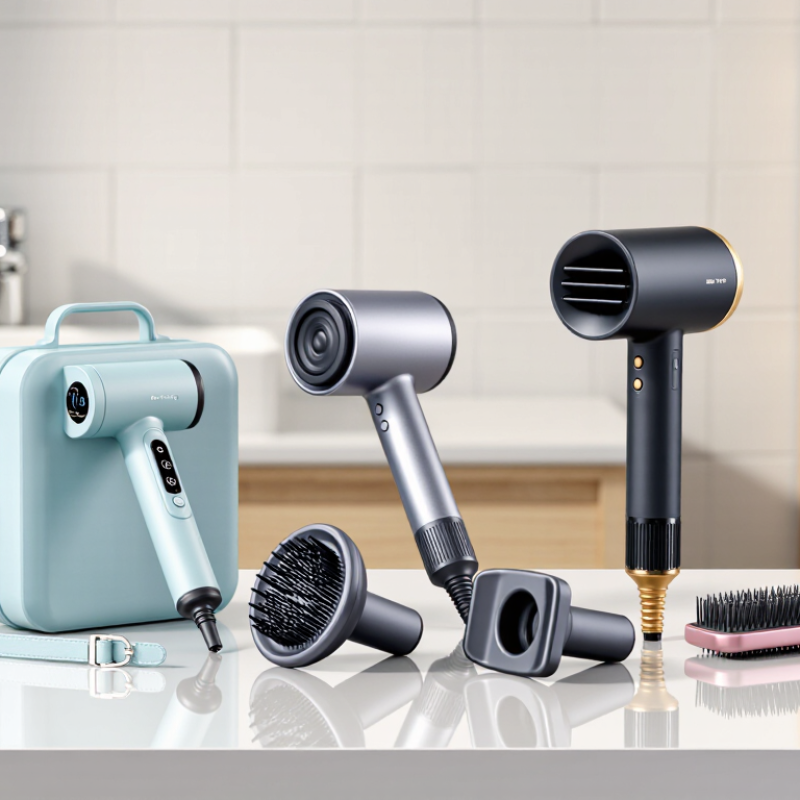
How Rechargeable Hair Dryers Work
What Are the Top Rechargeable Hair Dryer Types in 2026?
How Rechargeable Hair Dryers Work
A rechargeable hair dryer stores electricity in a built-in or removable battery. When switched on, the battery sends power to a small motor. The motor spins a fan, pushing air through the dryer’s body and out across the hair. Simple idea. The airflow helps remove moisture, while a heating element warms the air on models designed to provide heat.
Battery capacity and motor efficiency shape how long a dryer runs and how strong its airflow feels. Compact travel dryers usually prioritize low weight and convenient charging. Removable-battery designs can make swaps easier, while larger cordless models may offer more drying time at the cost of extra bulk. USB-C charging is common on smaller devices, but charging speed depends on the dryer and its power supply.
Temperature controls and safety features matter, too. Some dryers regulate heat to reduce overheating, though settings and performance vary by model. Check the manual for charging and cleaning instructions, and keep the air intake clear of lint. A blocked vent can restrict airflow. Cordless convenience is real, but battery-powered dryers may take longer to dry thick hair than full-size corded models. That trade-off is easy to underestimate. Compare runtime at the settings you actually use, not just the best-case figure on a product label.
Cordless Hair Dryer Types by Power and Design
What Are the Top Rechargeable Hair Dryer Types in 2026?
Cordless Hair Dryer Types by Power and Design
Rechargeable hair dryers generally split into lower-power compact models and higher-output designs with larger batteries. Compact units suit fringe touch-ups, short hair, or travel between rooms. They often use modest heat to conserve charge, so drying a full head can take longer. That trade-off is easy to underestimate. Higher-output models may move more air or offer stronger heat, but runtime depends on the selected setting, battery capacity, and hair length. There is no universal power tier, so compare measured runtime and charging details rather than relying on a “fast drying” label alone.
Design matters just as much. Handheld dryers are familiar and easier to aim at roots, while foldable versions pack neatly into a bag. Some have removable batteries, which can simplify replacement, though the added weight may change how the handle feels. A narrow nozzle helps direct airflow; a diffuser-style attachment can spread it more gently across curls, if the dryer supports one. Check that attachments fit securely. In real use, heat and airflow may feel weaker as the battery drains, and advertised runtime may reflect a low setting. A useful test is simple: consider your usual hairstyle, then ask whether the dryer can finish it without an inconvenient recharge.
Key Features That Distinguish 2026 Models
What Are the Top Rechargeable Hair Dryer Types in 2026?
Key Features That Distinguish 2026 Models
In 2026, rechargeable hair dryers differ most in battery capacity, airflow, and heat control. Compact travel models prioritize low weight and foldable handles, while larger cordless designs may offer stronger airflow for everyday styling. Neither type matches every routine. A small dryer can feel convenient in a gym bag, but may take longer to dry thick hair.
Check the battery’s stated runtime alongside its charging time. A dryer that runs for several short styling sessions may suit touch-ups better than a full wash-day routine. Adjustable heat and speed settings matter, too: lower heat can help limit unnecessary exposure, while a cool-air setting can finish a style. Useful details include a clear battery indicator, a removable lint filter, and a balanced grip that stays comfortable when held overhead.
Attachments and safety features also separate models. A concentrator can direct airflow toward a brush, while a diffuser may help distribute it across curls. Look for automatic shutoff or overheat protection, and follow the maker’s charging and cleaning instructions. Claims about salon-level performance deserve a careful read; cordless power has practical limits. That trade-off is easy to overlook. Before buying, consider your hair length, outlet access, and how much weight you can comfortably hold.
Best Rechargeable Dryer Types for Different Uses
Compact rechargeable dryers suit short trips, gym bags, and quick fringe touch-ups. Their smaller batteries reduce weight, but may limit heat and run time. Check the stated minutes per charge, then consider your routine: drying a pixie cut is different from drying dense, waist-length hair. Not every use suits cordless heat. For camping or brief power interruptions, choose a model with a secure battery lock and a clear charge indicator; keep it away from damp sinks and wet towels.
For shared homes or longer styling sessions, a higher-capacity handheld type offers more useful run time, though it can feel heavier during overhead use. A diffuser attachment may help shape curls, while a narrow nozzle directs airflow for smoother sections. Grand View Research estimated the global hair dryer market at USD 9.2 billion in 2023, with a projected 5.3% annual growth rate from 2024 to 2030. That report covers the overall market, not rechargeable models specifically, so it cannot show which cordless type users prefer. A useful comparison is still practical: check weight, charge time, heat settings, and independent run-time testing. Battery claims can look generous on paper. Real results vary with heat level and hair thickness.
Top Rechargeable Hair Dryer Types in 2026
A practical comparison of how each type suits common drying and styling needs.
Scores are indicative suitability ratings from 1 (lower fit) to 5 (higher fit), based on typical design trade-offs such as size, airflow, and attachment compatibility. They are not standardized laboratory test results; performance varies by model and hair type.
How to Compare Safety, Runtime, and Drying Performance
Comparing rechargeable hair dryers starts with safety, not styling claims. Check for a thermal cutoff, protected battery cells, and an intake that stays clear when held near hair. IEC 60335-2-23 sets safety requirements for appliances used for skin and hair care; look for evidence of testing against the relevant standard. The NFPA’s 2003–2007 U.S. estimates attributed about 4,600 home structure fires each year to hair dryers. That historical figure covers hair dryers generally, not rechargeable models, but it shows why overheating protection matters. Keep the air inlet clear. A blocked vent can trap heat.
Runtime figures need context. Battery capacity in watt-hours divided by average power draw gives a rough upper estimate: a hypothetical 60 Wh battery powering a 120 W dryer would last 30 minutes before conversion losses. Real use may be shorter, especially at high heat. Compare tests at the same setting, hair length, and starting dampness; otherwise, runtime claims are hard to judge. For drying performance, examine airflow and temperature together. High heat alone may dry quickly, but can feel harsh on the scalp. A small towel, thick hair, or a cool room can change results. One caveat: many listings omit test conditions, so published runtimes deserve a little skepticism.
What Are the Top Rechargeable Hair Dryer Types in 2026? - How to Compare Safety, Runtime, and Drying Performance
| Type |
Typical power and runtime* |
Drying performance |
Safety points to compare |
Best suited for |
| Compact, low-power cordless dryer |
Often around 100–250 W; roughly 20–40 minutes per charge, depending on the setting and battery capacity. |
Gentle airflow and limited heat; usually slow on dense or long hair. Better for touch-ups than a full, fast dry. |
Look for over-temperature shutoff, a securely fitted battery, and clear charging instructions. Keep air inlets unobstructed. |
Short hair, fringe, travel, or light styling away from an outlet. |
| Higher-output cordless dryer with built-in battery |
Often around 300–600 W; commonly about 10–25 minutes at higher output. Actual runtime varies substantially by heat and airflow setting. |
Stronger airflow can shorten drying time, but battery-powered output is generally below that of many full-size mains-powered dryers. |
Check for battery overcurrent and temperature protection, motor overheat protection, and an accessible filter for cleaning. |
Users who prioritize cordless convenience and need more airflow for occasional full-head drying. |
| Removable-battery cordless dryer |
Runtime depends on the battery pack and selected output; a spare charged pack can extend use, but does not increase the runtime of one pack. |
Performance ranges from light styling to moderate drying; compare airflow and heat settings rather than relying on battery capacity alone. |
Ensure the pack locks securely, use only the specified charger, and inspect the battery for damage. Do not use a swollen or damaged battery. |
Longer outings or work settings where charging access is limited and spare batteries are practical. |
| Corded-and-cordless hybrid dryer |
Cordless runtime is model- and setting-dependent; corded operation may provide longer use if the device is designed and rated for it. |
Offers flexibility, but cordless and corded modes may deliver different airflow or heat. Check the specifications for each mode. |
Confirm that corded operation is explicitly supported; follow the manual about using the dryer while charging and keep it away from water. |
Users who want cordless portability but also need an outlet-based option. |
*Power and runtime figures are indicative ranges, not guaranteed performance specifications; products differ, and runtime usually decreases at higher heat or airflow settings. For a fair comparison, check the stated runtime at the setting you will use, battery capacity in watt-hours (Wh), airflow, and whether the maker specifies a full-drying test. Keep the dryer and charger away from water, and follow the product manual.
FAQS
Its built-in or removable battery powers a small motor. The motor spins a fan, pushing air through the dryer. A heating element warms the air on heat-enabled models.
Compact, foldable dryers fit easily into a bag and suit short hair or fringe touch-ups. Quick touch-ups. They may take longer to dry a full head.
Not necessarily. Higher-output models may move more air, but results depend on battery capacity, settings, and hair length. A “fast drying” label does not tell the whole story.
Divide battery capacity in watt-hours by average power draw for a rough estimate. For example, a 60 Wh battery powering a 120 W dryer gives about 30 minutes before losses. High heat can shorten actual runtime.
Check for overheating protection, protected battery cells, and a clear air intake. Follow the manual’s charging and cleaning instructions. Lint can block airflow and trap heat.
It may, but drying can take longer than with a full-size corded dryer. Thick hair, a cool room, and high heat settings can affect results. Not always.
A narrow nozzle directs air toward roots, while a diffuser spreads airflow more gently across curls. Check that each attachment fits securely and is supported by the dryer.
Compare runtime at the settings you actually use, charging details, weight, and airflow. Consider whether it can finish your usual hairstyle without an inconvenient recharge. Advertised runtimes can be optimistic.
Conclusion
Rechargeable hair dryers use built-in batteries to power a heating element and fan, allowing you to dry your hair without staying near a wall outlet. In 2026, cordless options vary in power, battery capacity, size, and design, from compact models suited to travel and quick touch-ups to larger units intended for more complete styling. Their features may include adjustable heat and airflow, battery indicators, detachable attachments, and safeguards against overheating.
Choosing the right Recharge Hair Dryer depends on where and how you plan to use it. Compare expected runtime and charging time with your typical drying routine, and consider whether the dryer’s airflow and heat settings suit your hair type. Safety features, weight, noise, and ease of handling also matter. A balanced comparison of battery performance and drying results can help you find a model that offers practical cordless convenience without compromising comfort or control.

 KangRoad Electrical