How to Choose a Professional Hair Dryer?

Time:2026-10-15 Author:Charlotte
0%

Choosing a Profesional Hair Dryer is no longer a simple matter of wattage, speed, or appearance. Modern buyers face ionic systems, ceramic heating, brushless motors, temperature sensors, and unfamiliar marketing claims. Grand View Research estimates that the global hair dryer market was worth approximately USD 9.3 billion in 2023. Its forecast also indicates steady growth through 2030. That expansion reflects stronger demand for faster drying and reduced hair damage.

Performance still needs context.

A powerful motor may shorten drying time, but excessive heat can roughen the cuticle and increase moisture loss. Trichologist Anabel Kingsley explains that “heat styling can make hair dry, brittle, and prone to breakage.” Her warning matters when comparing salon equipment with inexpensive consumer models. The best Profesional Hair Dryer should offer adjustable heat, controlled airflow, a concentrated nozzle, and comfortable handling. A cool-shot button also helps finish the style without prolonged heat exposure.

However, no single dryer suits every user. Thick, coarse hair may require stronger airflow, while fine or chemically treated hair needs gentler settings. That assumption deserves testing. Look for independent safety certifications, warranty coverage, filter design, noise information, and repair support. Euromonitor’s beauty and personal-care analysis also shows that consumers increasingly value durability and energy efficiency, not only styling speed. The practical choice is therefore based on hair condition, daily routine, and measurable controls. A glossy advertisement is not evidence. Check the specifications, test the balance in your hand, and question promises that lack transparent testing.
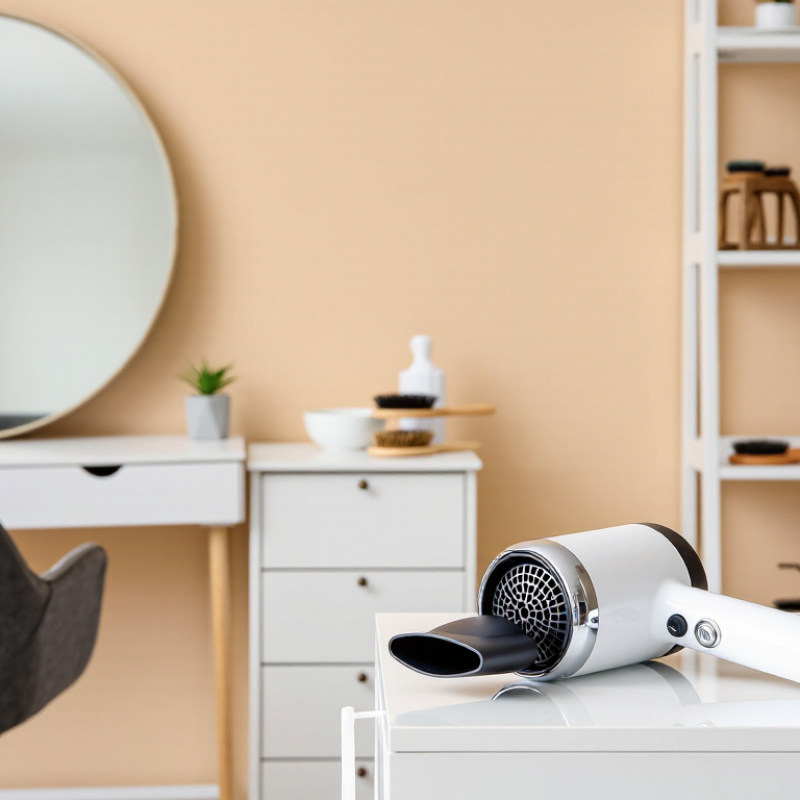
How to Choose a Professional Hair Dryer?

Define Your Hair Type, Styling Goals, and Salon Requirements

How to Choose a Professional Hair Dryer?

Start with texture. Fine hair usually needs adjustable heat and gentle airflow. High heat can flatten volume or leave ends brittle. Thick, coarse hair often benefits from stronger airflow and a concentrator nozzle. Curly hair may need a diffuser that dries without disturbing the curl pattern. Watch the heat. Hold the dryer several inches away and keep it moving.

Your styling goal matters as much as hair type. Choose a narrow nozzle for smooth blowouts and controlled direction. Select a diffuser for defined waves, curls, or added root lift. If you often create volume, look for balanced weight and comfortable controls. A powerful motor can shorten drying time, but excessive airflow may create frizz. I once focused too much on speed and ignored handling. My wrist noticed before my hairstyle did.

Salon requirements demand more than performance. A professional dryer should feel stable during repeated use, with a flexible cord and accessible switches. Removable filters make cleaning easier and help maintain airflow. Check the electrical rating and follow local safety requirements. For shared workspaces, consider noise levels and heat consistency. Test the grip for several minutes if possible. Small discomfort becomes a serious problem during a full schedule. Also, replace damaged cords promptly. Convenience should never outrank safe operation.

Compare Motor Types, Wattage, Heat, and Airflow Settings

How to Choose a Professional Hair Dryer?

A professional hair dryer should match your routine, hair texture, and workload. Motor type affects durability, noise, weight, and airflow consistency. AC motors usually suit frequent salon use because they deliver steady pressure. DC motors are often lighter and easier to handle at home. Brushless motors can offer efficient performance, but their higher cost may not suit every budget. I once chose a powerful dryer that felt impressive, yet its heavy body tired my wrist quickly.

Wattage shows energy use, not complete drying performance. Around 1,600 to 2,000 watts often provides a practical balance for thick or damp hair. Fine hair may need less power to avoid excessive heat. Strong airflow can shorten drying time, but heat control remains essential. Choose several temperature settings, including a genuinely cool option for finishing and scalp comfort. Airflow settings also matter. A narrow nozzle concentrates air for smoothing, while a diffuser spreads airflow for curls and waves. Too much pressure can disturb natural texture.

Tips: Test the grip before buying. Hold the dryer for one minute. Check whether the controls are easy to reach without changing your hand position. Start with medium heat and moderate airflow, then increase gradually. Keep the nozzle moving. Even experienced users sometimes rely on maximum heat too quickly. That habit deserves reconsideration. A reliable dryer should feel controlled, not merely powerful.

How to Choose a Professional Hair Dryer?

Compare motor types, rated power, airflow, and heat settings before choosing a professional hair dryer.

Motor type Typical rated power Typical airflow Common heat settings Common speed settings
AC motor 1,800–2,200 W 1.8–2.2 m³/min 2–3 2
DC motor 1,200–1,875 W 1.4–1.8 m³/min 2–3 2
BLDC motor 1,400–2,000 W 1.6–2.0 m³/min 3–4 2–3

The chart uses representative midpoints from the ranges shown above. AC motors are commonly selected for sustained salon use, DC motors can offer lower weight and cost, and BLDC motors typically provide efficient performance with long service life. Airflow figures are not measured under one universal standard, so compare test conditions as well as the listed value.

Evaluate Ionic, Ceramic, and Tourmaline Technologies

How to Choose a Professional Hair Dryer?

When comparing hair dryers, study ionic, ceramic, and tourmaline technologies separately. Ionic dryers release negative ions that help break water droplets into smaller particles. Hair may dry faster and feel less static afterward. This can benefit thick, coarse, or naturally frizzy hair. However, very fine hair may lose useful volume. The smooth finish is not always better.

Ceramic heating systems distribute warmth more evenly across the airflow. That reduces concentrated hot spots, especially when you keep the dryer moving. Tourmaline usually supports ionic performance and may produce gentle infrared heat. Claims about faster drying vary between models and hair types. In practical testing, airflow strength often matters more than technology alone. Check the motor, temperature controls, cool-shot button, and nozzle design. These details affect daily results.

Use medium heat near the roots and lower heat around fragile ends. Keep the dryer several inches away. Never hold it still for too long. I once focused too much on ionic performance and ignored the dryer’s weight. My wrist noticed before my hair did. A professional choice should match your texture, routine, and handling comfort. Technology helps, but careful technique still decides the finish.

How to Choose a Professional Hair Dryer? - Evaluate Ionic, Ceramic, and Tourmaline Technologies

Evaluation Dimension Ionic Technology Ceramic Technology Tourmaline Technology
Operating principle Releases negatively charged ions that can help break up water droplets and reduce static electricity. Uses ceramic heating surfaces or elements to distribute heat more evenly than exposed metal heating coils. Uses tourmaline-containing components to produce negative ions when heated; performance depends on the amount and placement of the material.
Primary benefit May shorten perceived drying time and help reduce flyaways, especially in humid conditions. Promotes more consistent heat distribution, which may reduce localized hot spots during styling. Combines even-heating potential with an ion-producing effect; results vary among dryer designs.
Frizz and static control Strong potential for reducing static and smoothing the hair surface; excessive ion output may reduce volume in fine hair. Usually provides moderate smoothing through consistent heat, but does not inherently neutralize static as strongly as ionic systems. May provide strong smoothing and static reduction, although actual results depend on the dryer’s ion output and airflow.
Drying performance Often effective for thick, coarse, or high-density hair because water droplets may be dispersed more efficiently. Performance depends mainly on motor power, airflow design, and temperature settings rather than ceramic material alone. Can support efficient drying, but motor airflow and nozzle design remain more important than the material label alone.
Best suited for Thick, coarse, curly, or frizz-prone hair; choose adjustable ion settings for fine or flat hair. Fine, fragile, dry, or chemically treated hair that benefits from controlled and evenly distributed heat. Users seeking a combination of smoothing, static control, and balanced heat distribution.
Potential concern High ion output can make fine hair appear less full; ionization does not prevent heat damage by itself. “Ceramic” does not guarantee low heat or low damage; prolonged exposure to high temperature can still weaken hair. Tourmaline claims vary widely because construction, material quantity, airflow, and temperature control differ between models.
Recommended controls Multiple heat and speed levels, a cool-shot button, and adjustable or switchable ion output. Multiple temperature settings, steady heat regulation, a cool-shot button, and a concentrator nozzle. Adjustable heat and airflow, a cool-shot button, and clear information about the heating and ion-generation system.
Heat-damage considerations Use the lowest effective temperature, keep the dryer moving, and maintain approximately 15–20 cm distance from the hair. Even heat may help limit hot spots, but safe technique and shorter exposure are still essential. May offer balanced heating, but it should not be treated as protection against thermal damage.
Professional-use checklist Check ion control, motor airflow, removable filter, cable length, and compatibility with a diffuser. Check heat consistency, temperature range, motor durability, removable filter, and ergonomic balance. Verify construction details rather than relying only on the tourmaline label; prioritize airflow, controls, and serviceability.
Overall selection guidance Choose ionic technology when speed and frizz control are the main priorities. Choose ceramic technology when even heat and gentle temperature management are most important. Choose tourmaline technology when smoothing and ion-related benefits are desired, provided the dryer also has strong airflow and precise controls.

Note: Technology labels describe design features, not guaranteed results. Motor power, airflow speed, temperature regulation, nozzle design, hair condition, and styling technique strongly affect real-world performance.

Check Attachments, Ergonomics, Noise, and Safety Features

A professional hair dryer should be judged by more than wattage. Start with its attachments. A concentrator should create a narrow, controlled airflow for smoothing. A diffuser should spread air gently across curls and reduce harsh disruption. Check whether each attachment locks firmly. Loose fittings can interrupt styling and increase handling time. I once ignored this detail, and the nozzle slipped during use.

Ergonomics matter during repeated styling. Hold the dryer for several minutes before buying it, if possible. The handle should feel balanced, not front-heavy. Buttons must be reachable without changing your grip. A long, flexible cord also reduces wrist twisting. These small details are easy to dismiss. They become obvious after daily use.

Noise deserves a practical test near your ear. NIOSH’s Criteria for a Recommended Standard: Occupational Noise Exposure identifies 85 dBA over eight hours as a recommended exposure limit, using a 3 dB exchange rate. A hair dryer is used for less time, but close-range sound can still feel tiring. Choose a quieter model when possible, and avoid covering ventilation openings. For safety, look for overheat protection, a washable filter, and an immersion-protection plug where applicable. IEC 60335-2-23 addresses safety requirements for household and similar hair-care appliances. Certification marks help, but they are not a substitute for inspecting damaged cords or cracked housings. My own checklist is useful, though not perfect. Personal comfort still varies.

Assess Durability, Maintenance Needs, Warranty, and Overall Value

How to Choose a Professional Hair Dryer?

Durability starts with construction, not impressive airflow numbers. The U.S. Department of Energy lists typical hair dryers at 1,200–1,875 watts. Higher power can increase heat, noise, and component stress. Check the housing, switch feel, cable flexibility, and plug strain relief. A removable rear filter matters in busy salons. It allows regular cleaning before dust restricts airflow. Use a soft brush weekly, then inspect the filter frame for cracks. I once ignored this small task. The dryer became noticeably hotter within months.

Warranty terms reveal more than promotional language. Look for coverage periods, repair procedures, replacement rules, and exclusions for professional use. A longer warranty is useful only when service is accessible. Keep the receipt and record the purchase date. Also compare the cost of a filter, heating element, and motor repair. The cheapest purchase may create higher downtime and replacement costs. This matters because the Global E-waste Monitor 2024 reported 62 million tonnes of electronic waste generated worldwide in 2022. Only 22.3% was formally collected and recycled. Repairable equipment supports better value and reduces unnecessary disposal. However, I would not treat repairability as a guarantee. Parts availability can change. Choose a dryer with clear maintenance instructions, replaceable accessories, stable heat control, and a warranty that matches your working environment.

FAQS

Which motor type suits frequent professional use?

An AC motor usually provides steady pressure for repeated salon work. It may feel heavier and louder. Check your wrist comfort carefully.

Is higher wattage always better for drying hair?

No. Wattage measures energy use, not complete performance. Around 1,600 to 2,000 watts can suit thick, damp hair. Fine hair may need less power.

How should I choose temperature and airflow settings?

Select several heat levels and a real cool setting. Start with medium heat and moderate airflow. Increase gradually. Heat needs restraint.

What nozzle works best for smooth, straight styling?

A narrow nozzle concentrates airflow for smoothing. Keep it moving and aim along the hair direction. Holding it still can create harsh hot spots.

When is a diffuser useful?

A diffuser spreads airflow across curls and waves. It helps preserve natural texture. Excessive pressure can disturb the shape. Less force may work better.

What do ionic features do?

Ionic airflow can reduce static and break water droplets into smaller particles. It may benefit thick or frizzy hair. Fine hair may lose some volume.

Why consider ceramic or tourmaline heating systems?

Ceramic heating can distribute warmth more evenly. Tourmaline may support ionic performance and gentle infrared heat. Results vary between hair types and models.

How can I test a dryer before buying it?

Hold it for one minute. Check the grip, weight, and control placement. Your fingers should reach the buttons without shifting position. Comfort matters.

How far should the dryer stay from the hair?

Keep it several inches away, especially near fragile ends. Use medium heat near the roots and lower heat at the tips. Perfect technique is difficult, but careless heat causes problems.

Conclusion

Choosing a Profesional Hair Dryer starts with understanding your hair type, styling goals, and salon requirements. Fine, thick, curly, or color-treated hair may need different heat and airflow levels, so adjustable settings are essential. Compare motor types and wattage to find a balance between drying speed, power, and energy efficiency. Consider ionic, ceramic, and tourmaline technologies based on whether you want to reduce frizz, distribute heat evenly, or protect hair from excessive dryness.

A practical dryer should also include useful attachments, such as concentrators or diffusers, while remaining comfortable to hold during extended use. Low-noise performance, overheating protection, and a secure power design can improve safety and convenience. Finally, evaluate construction quality, filter cleaning requirements, warranty coverage, and expected service life. The best choice is not always the most powerful model, but the one that delivers reliable performance, suits your daily routine, and provides strong overall value.


Charlotte

Charlotte

Charlotte is a seasoned marketing professional with a deep understanding of the company's portfolio and a passion for elevating its presence in the market. With a keen eye for detail and a commitment to excellence, she ensures that our professional blog is regularly updated with insightful articles......