Choosing a One Step Hair Dryer And Styler is not just about picking the tool with the most attachments or the highest wattage. The right choice depends on your hair’s length, texture, and usual styling routine. Fine hair may need gentler heat and lighter tension, while thick or curly hair can benefit from stronger airflow and a larger barrel. Start with the details you can compare: heat settings, airflow options, brush shape, weight, and cord length. Small details count. A heavy handle can feel tiring when you are styling the back of your head.
Safety and control matter as much as speed. Look for clear heat settings, a cool option, and instructions that explain how to use the tool on damp hair. Check the manufacturer’s guidance, since these devices are not all designed for the same starting hair condition. Removable filters and easy-to-clean bristles can also help with routine upkeep. Still, product claims do not predict every result. A brush that creates smooth volume on one person may tug or flatten another person’s hair. That limitation matters. Consider your typical morning, the finish you actually want, and whether you are comfortable handling a warm appliance near your scalp. In this guide, we’ll compare practical features and trade-offs so you can choose with realistic expectations—not just a polished product photo in mind.
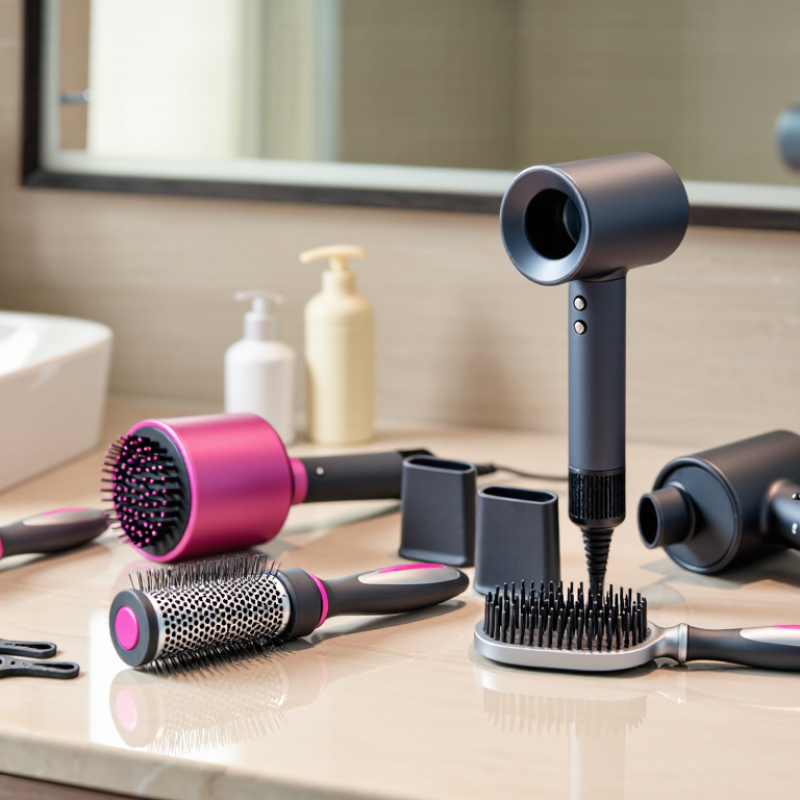
A one-step hair dryer and styler combines a heated-air dryer with a brush-shaped barrel. Air flows through vents while bristles guide sections into shape. Instead of drying first and styling afterward, you work on both tasks in the same pass. The barrel may be round or oval, and some models offer interchangeable attachments. It is not a shortcut for every hair type. Thick, very wet sections may need more time or a rough dry before styling.
The tool works best when hair is damp, not dripping. Take a section about as wide as the brush, guide it from roots to ends, and keep the barrel moving. A 2011 laboratory study in Annals of Dermatology found that greater dryer heat increased visible hair-surface damage. The researchers also reported less damage when the dryer stayed about 15 centimeters away and moved continuously. Small details matter. Use a lower heat setting when possible, and let a section cool before brushing it again. The tool’s name suggests one easy step, but tension, airflow, and section size still affect the result. It can take practice.
Hair type should guide the tool’s airflow, brush size, and heat settings. Fine or fragile hair often benefits from a lightweight styler with adjustable, lower heat and a smaller brush for root lift. Thick or coarse hair may need stronger airflow and a larger oval brush to smooth wider sections. Curly or coily hair can benefit from controlled tension, but choose an attachment that works with your curl pattern rather than forcing a straight finish. Check the tool’s instructions; not every model is designed for soaking-wet hair.
Your styling goal matters just as much. For volume, lift small sections at the roots and roll the brush away from your face. For a smoother finish, use smaller sections and guide the tool from roots to ends. Want loose bends? A rounder brush can help shape the ends, though the result may take practice. No single attachment does everything equally well.
Tips: Start with towel-dried hair, apply heat protectant, and work in sections about two inches wide. Use the lowest effective heat and keep the tool moving. If your ends feel rough, reduce heat or shorten each pass. My own instinct might be to turn the heat up for speed, but that can leave hair feeling dry. Try one setting at a time and adjust based on how your hair responds.
When comparing one-step hair dryers and stylers, look beyond the number of attachments. Adjustable heat and airflow matter more for everyday control. Fine or color-treated hair may need gentler settings, while thick hair can take longer to dry with weak airflow. A cool setting can help finish a style without adding more heat. Check whether the controls are easy to reach while holding the tool. Small details matter. A slippery button or heavy handle becomes noticeable halfway through styling.
The barrel size should suit the styles you actually wear. Smaller barrels create tighter bends, while larger ones give softer volume. Check that attachments lock in securely and are simple to remove after cooling. A long swivel cord helps when the outlet is awkwardly placed, but it cannot compensate for an uncomfortable grip. If possible, hold the tool before buying; product descriptions rarely show how tiring it feels after ten minutes. Noise is worth considering, too, especially in a shared home. I would not assume the highest heat setting is the fastest option. Hair thickness, dampness, and section size all affect drying time, and real results may differ from the product claims.
| Feature | Basic Oval Hot-Air Brush | Ionic Oval Hot-Air Brush | Rotating Hot-Air Brush | Multi-Attachment Air Styler |
|---|---|---|---|---|
| Typical design | Fixed oval brush head for drying, smoothing, and adding root lift. | Fixed oval brush head with an ionic feature listed by the manufacturer. | Brush head rotates to help wrap or guide sections of hair while styling. | Dryer handle with interchangeable brush or styling attachments. |
| Power range to compare | Many models are approximately 700–1,200 W. | Many models are approximately 700–1,200 W. | Often approximately 800–1,200 W; check the individual model. | Varies by design; compare the stated wattage and intended use. |
| Heat and speed controls | Look for at least two heat settings and a lower setting for finer hair. | Compare the number of heat and airflow settings; ionic features do not replace heat control. | Check for separate rotation directions, speed control, and a lower heat option. | Check whether settings work across all attachments and whether a cool-air option is included. |
| Styling flexibility | Best suited to a smooth blowout, volume, and soft bends with one head. | Similar fixed-head styling; the ionic feature may appeal to users concerned about static. | Can assist with creating curved ends or wraps, but takes practice to control. | Offers more styling options, though changing attachments adds steps. |
| Hair length and section size | A medium or large oval head is generally easier to use on medium-to-long sections. | Choose head dimensions that suit the hair length and the desired level of root lift. | Smaller heads may be easier to maneuver around shorter layers; confirm the barrel size. | Attachment sizes can provide options for different lengths and styling effects. |
| Weight and handling | Check the total weight and handle grip, especially for longer styling sessions. | Compare weight with similar fixed-head brushes; added features may affect balance. | Rotating mechanisms can change balance; test whether the controls are easy to reach. | Consider the handle weight plus the weight and storage needs of the attachments. |
| Cleaning and upkeep | Look for a removable filter and brush surfaces that are easy to clear of hair. | Check filter access and cleaning instructions; the ionic feature does not remove routine upkeep. | Check how hair is removed from the brush and whether the rotating head is detachable. | Confirm that attachments detach easily and that filters can be cleaned as directed. |
| Safety checks | Look for a cool tip, clear instructions, and an automatic shutoff if offered. | Check the same safety features; do not assume they are included because the product is ionic. | Review instructions for the rotating head and check for a cool tip and secure attachment. | Check attachment locking, heat warnings, and any automatic shutoff specification. |
| Best fit | Shoppers who want a straightforward tool for a smooth, voluminous finish. | Shoppers who want a fixed oval brush and prefer a model that also lists ionic output. | Shoppers comfortable with a moving brush and interested in assisted curling or shaping. | Shoppers who value multiple styling options and are comfortable switching attachments. |
Buying tip: Wattage, settings, weight, and included safety features vary by model. Treat the ranges above as general comparison guidance, and verify specifications in the product manual. Use a hot-air styler on damp, towel-dried hair rather than soaking-wet hair, and choose a lower heat setting when suitable for your hair.
When choosing a one-step dryer and styler, inspect the details you will touch and clean. A cool-touch tip, stable handle, clear airflow openings, and an automatic shutoff can make daily use easier and safer. Check that the cord feels sturdy and does not twist sharply near the handle. Small details matter. Use the tool only on dry hands, and keep its air intake clear of loose hair.
Heat deserves closer attention. A 2011 study in Annals of Dermatology measured hair-surface temperatures of about 47°C at 15 centimetres, 61°C at 10 centimetres, and 95°C at 5 centimetres. The researchers observed more hair damage with closer, hotter drying. Their test supports keeping some distance and moving the dryer continuously, rather than holding it against one section. The study was controlled, though; real hair varies in texture, condition, and styling history.
For easier handling, compare weight, grip, button placement, and whether the brush head separates for cleaning. Try holding a similar tool at shoulder height for a minute; a heavy head can feel tiring fast. Choose adjustable heat and airflow, then start low and raise them only if needed. The American Academy of Dermatology also advises using the lowest heat setting to reduce damage. I would not treat any setting as universally safe: bleached or fragile hair may need less heat, even when styling takes longer.
Match the dryer-styler to how often you use it, your hair length, and the finish you want. For quick weekday smoothing, prioritize a comfortable grip, simple controls, and a manageable weight over extra attachments. If you style thick or long hair often, a wider brush head and multiple heat settings may save time. Set a realistic budget: a basic model can suit occasional use, while frequent styling may justify paying more for sturdier construction and a longer warranty. Price alone is not proof of better results.
Heat control matters. A 2011 study in Annals of Dermatology compared hair drying at 47°C, 61°C, and 95°C, and observed greater surface damage at higher temperatures. The study does not predict exactly what will happen with every tool or hair type, but it supports choosing adjustable heat rather than relying on maximum power. Fine, bleached, or already dry hair may need lower settings and shorter sessions. I would not assume one setting suits every day; dampness and styling time change.
Tips: Check the return period and warranty before buying. Test the handle’s balance if possible, and see whether the lowest heat setting still gives enough airflow. For a tight budget, skip accessories you will rarely use. Spend on useful controls instead.
Compare indicative U.S. retail price bands with the features that may suit your budget and routine.
Value models around $25–$50 can suit occasional, simple styling. Mid-range models around $50–$100 may offer more heat or airflow settings for frequent use. Premium models around $100–$200 may include extra attachments or convenience features. Price ranges are indicative and vary by retailer; choose based on the settings and attachments you will actually use.
It combines a dryer with a brush-shaped barrel. Airflow and bristles dry and shape hair in the same pass. It still takes practice.
No. Start with towel-dried, damp hair, not dripping hair. Very wet or thick sections may need rough drying first.
Keep sections about as wide as the brush. Around two inches works as a starting point for many styles. Adjust if drying feels slow.
Use adjustable, lower heat and a smaller brush for root lift. Keep the tool moving. Small details matter.
Stronger airflow and a larger oval brush may help smooth wider sections. Thick hair can still take longer to dry.
For volume, lift small sections at the roots and roll the brush away from your face. A rounder barrel can shape the ends into loose bends.
Not necessarily. Hair thickness, dampness, and section size affect drying time. I might be tempted to turn up the heat, but that can leave hair feeling dry.
Check heat and airflow controls, barrel size, attachment locks, handle comfort, and cord length. A heavy grip can feel tiring after ten minutes.
Choosing the best One Step Hair Dryer And Styler starts with understanding how it combines drying and styling in a single tool, helping simplify your routine. Consider your hair type, length, texture, and styling goals: fine or delicate hair may benefit from gentler heat and airflow, while thicker hair may need more power or a range of settings. Think about whether you want smoother results, added volume, defined curls, or a versatile tool for everyday styling.
When comparing models, look at attachments, heat and speed options, weight, handle comfort, and how easy the tool is to clean and store. Safety features such as overheat protection and a cool setting can support more comfortable use, while thoughtful temperature control helps limit unnecessary heat exposure. Finally, match your choice to your budget and routine. A model that is easy to use, suits your hair, and offers the features you will actually use can be a better fit than one with extras you do not need.

KangRoad Electrical