China Top Hair Dryer Salon Suppliers for Global Buyers?

Time:2026-09-20 Author:Amelia
0%

Choosing reliable China Top Hair Dryer Salon Suppliers for Global Buyers requires more than comparing prices. Salon professionals need tools that perform through long working hours, repeated heat cycles, and demanding styling routines. A dryer may look powerful in a product photograph, yet feel heavy after twenty blowouts. Its handle balance, cord length, airflow control, and noise level matter on a busy salon floor.

Sam Villa, a respected salon educator and professional tool expert, says, “The right tools create the right results.” This principle fits every serious Hair Dryer Salon purchasing decision. Buyers should examine motor durability, temperature stability, ionic technology, filter access, and replacement-part availability. They should also request product samples before placing large orders. A comfortable dryer in the hand can reduce wrist strain during round-brush styling. A stable cool-shot button can protect the final shape.

However, supplier evaluation is rarely perfect. Certifications and laboratory reports are important, but they do not replace real salon testing. Some suppliers communicate quickly before payment, then respond slowly after delivery. That warning deserves attention. Buyers should review factory experience, quality-control procedures, packaging strength, warranty terms, and export service. They should ask how suppliers handle damaged cartons or inconsistent batches.

China offers extensive manufacturing capacity, but capacity alone does not guarantee dependable quality. The strongest partners combine engineering knowledge, transparent communication, and consistent inspection. This guide explores leading China Top Hair Dryer Salon Suppliers and the practical details global buyers should check before choosing a long-term partner. Small details matter. Mistakes become expensive when hundreds of dryers arrive.
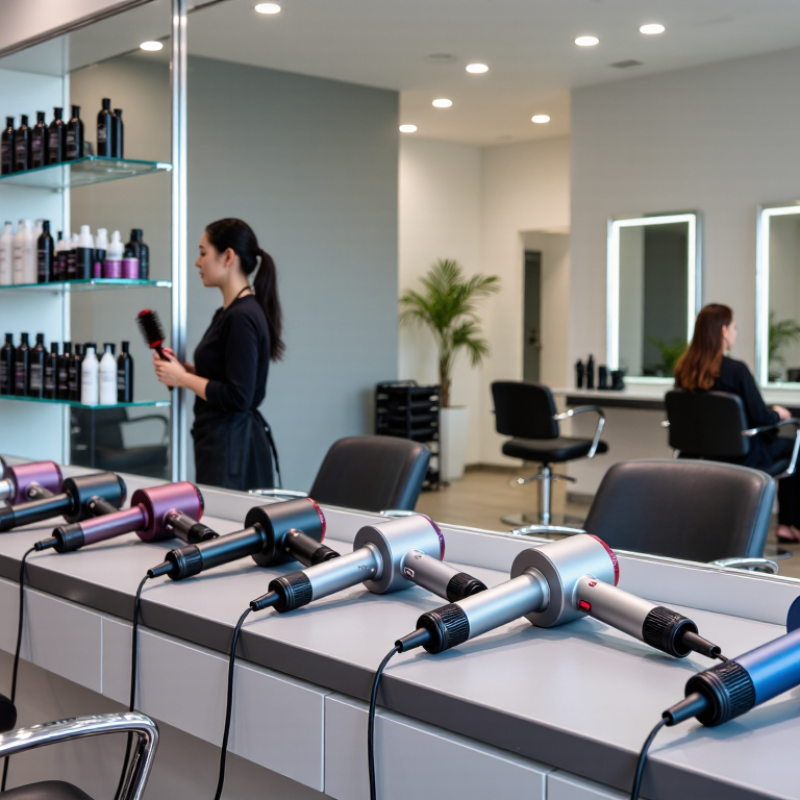
China Top Hair Dryer Salon Suppliers for Global Buyers?

What Defines a Top Hair Dryer Supplier in China

A top hair dryer supplier in China offers more than competitive pricing. It proves stable performance across repeated salon use. Grand View Research estimated the global hair dryer market at about USD 9.2 billion in 2023. That scale increases buyer expectations for reliability, noise control, and delivery consistency. A capable supplier should provide motor data, airflow measurements, thermal cut-off results, and complete material specifications. Factory audits also matter. Photos are not enough.

Technical compliance separates experienced suppliers from simple traders. Products should be tested against relevant requirements in IEC 60335-2-23, which covers household and similar-use hair care appliances. Ask for traceable test reports, not copied certificates. Check plug compatibility, insulation, overheating protection, and cable durability for each target market. Mordor Intelligence projects continued growth in the hair dryer market, but growth does not excuse weak quality control. One overlooked detail can create returns, salon downtime, or customer complaints.

A lower price can still be expensive.

Tips:

  • Request three production samples from different batches.
  • Measure drying time, surface temperature, airflow, and sound level.
  • Review the supplier’s defect records and corrective actions.
  • Do not rely on one successful sample. Specifications can drift.
  • A written inspection plan helps, although it cannot replace independent testing.

Key Product Types for Professional Salon Use

China Top Hair Dryer Salon Suppliers for Global Buyers

Key Product Types for Professional Salon Use

For global salon buyers, product selection should begin with the service, not the catalog photograph. In busy styling rooms, handheld professional dryers offer flexible control, concentrator nozzles, and adjustable heat. They suit blowouts, fringe work, and quick finishing. Ask suppliers for motor data, airflow readings, noise levels, and replacement-part plans. A low purchase price means little when a failed switch stops a workstation.

Hooded dryers serve color processing, roller sets, and steady treatments. They distribute warm air across seated clients, reducing constant hand movement. Wall-mounted models save floor space and support compact salons. Infrared dryers may shorten some treatment times, but results depend on hair condition and operator settings. Do not accept vague claims. Request test methods, temperature ranges, plug options, and safety documents for the destination market.

I have found that ionic and ceramic features can improve handling, yet they are not magic solutions. Fine hair may need lower heat, while dense hair often needs stronger airflow. A sample test reveals more than a polished brochure. Check balance, cord length, filter cleaning, packaging strength, and daily heat performance. One detail is easy to miss: staff comfort. Even an efficient dryer becomes a poor choice when its grip causes fatigue.

How to Evaluate Chinese Hair Dryer Manufacturers

Global buyers should evaluate Chinese hair dryer manufacturers beyond price and catalogue design. Grand View Research valued the global hair dryer market at approximately USD 9 billion in 2023, with continued growth expected through 2030. That demand increases supplier competition, but not necessarily product consistency.

Request production samples from different batches. Measure airflow, temperature stability, drying time, noise, and cord durability. A salon dryer should feel balanced after several minutes, not only look attractive in photographs.

Ask for documented quality systems, component traceability, and independent safety test reports. IEC 60335-2-23 covers safety requirements for appliances used for skin or hair care. Check whether the tested model matches the factory’s current production model. This detail is often missed.

Verify factory audit records, incoming-material inspections, burn-in procedures, and failure-rate data. ISO 9001 certification can support process control, but it does not replace product testing. Request evidence, not promises.

Supplier capability also requires commercial testing. Compare minimum order quantities, tooling ownership, spare-part availability, warranty handling, and lead-time records.

The International Trade Centre emphasizes reliable trade data and supplier verification when assessing international sourcing risks. Use a small pilot order before committing to salon-scale volume. Inspect packaging drops, plug compatibility, user instructions, and after-sales response times.

Forecasts from Mordor Intelligence and other market researchers differ, so avoid building decisions on one growth figure. A manufacturer may pass a sample review and still fail during peak production. That uncomfortable possibility deserves a written control plan.

Quality, Safety, and Export Compliance Standards

China Top Hair Dryer Salon Suppliers for Global Buyers?

Quality, Safety, and Export Compliance Standards

Professional salon hair dryers must survive long hours, repeated handling, and high heat. A reliable supplier should provide clear specifications for motor life, airflow temperature, noise, and thermal protection. During factory reviews, buyers should inspect cable strain relief, switch durability, filter cleaning, and housing resistance. These small details often reveal more than attractive samples.

Export compliance depends on the destination market. Ask for relevant safety test reports, such as IEC 60335 requirements, and confirm whether CE, UKCA, RoHS, or other declarations apply. Voltage, plug type, labeling, manuals, and carton markings must match the importing country. Reports should identify the exact model, not a similar product. A certificate alone is not enough. Production can change after testing, which is an uncomfortable but important risk.

Tips: Request a pre-shipment inspection and retain approved samples. Check each batch for overheating, loose switches, damaged cords, and abnormal vibration. Ask for factory traceability, corrective-action records, and laboratory accreditation. In my experience, suppliers usually answer technical questions confidently, but some documents remain incomplete. That weakness deserves follow-up, not blind trust. A small pilot order can expose packaging failures, inconsistent airflow, or unclear instructions before larger shipments.

How Global Buyers Can Compare Suppliers and Place Orders

Global buyers comparing salon hair dryer suppliers should look beyond glossy catalogs. Request factory photos, production capacity, quality-control procedures, and recent test reports. Check whether the supplier can produce the required voltage, plug type, wattage, airflow, and heat settings for your market. A clear specification sheet prevents expensive misunderstandings.

Order samples before discussing large quantities. Test drying speed, temperature stability, noise, cable flexibility, switch strength, and surface heat after continuous use. Ask for the sample lead time, minimum order quantity, packaging options, warranty process, and spare-parts policy. Small details matter. A loose nozzle can damage customer confidence.

Compare quotations on the same basis. Confirm whether prices include packaging, inspection, export documents, and shipping terms. Use a written purchase order with product drawings, approved samples, delivery dates, payment stages, and acceptable defect limits. Third-party inspection can reduce risk before shipment. It is not perfect, though. Reports may cover only selected units, so keep your own inspection records. A low price may also reflect thinner materials or weaker after-sales support. Ask difficult questions early, and record every answer. Some suppliers respond quickly but avoid precise commitments. That is a warning sign. A dependable partner usually explains limits clearly and accepts reasonable quality checks.

China Top Hair Dryer Salon Suppliers for Global Buyers? - How Global Buyers Can Compare Suppliers and Place Orders

Supplier comparison framework with indicative specifications and purchasing terms for professional salon hair dryers

Comparison Dimension Supplier Profile A Supplier Profile B Supplier Profile C Buyer Verification Point
Typical product focus Professional AC-motor dryers Compact DC-motor dryers High-speed brushless-motor dryers Match motor type with expected salon workload and service life.
Common rated power 1,800–2,400 W 1,400–2,000 W 1,200–1,800 W Confirm tested input power, heating stability, and local electrical requirements.
Available voltage versions 220–240 V / 50–60 Hz; selected 110–120 V models 110–120 V or 220–240 V versions 100–240 V on selected models Request a voltage-specific sample; do not rely only on catalogue listings.
Heat and speed controls 2 heat settings, 2 speed settings, cool shot 3 heat settings, 2 speed settings, cool shot 3 heat settings, 3 speed settings, cool shot Test switch durability and cool-shot response during sample approval.
Airflow technologies Concentrator nozzle; optional diffuser Concentrator nozzle and diffuser commonly available Concentrator, diffuser, and ionic function on selected models Ask for airflow speed, temperature distribution, and accessory specifications.
Noise level claim Approximately 75–85 dB, model dependent Approximately 72–82 dB, model dependent Approximately 68–78 dB, model dependent Require a test method and measurement distance; avoid comparing unverified claims.
Approximate net weight 0.65–0.85 kg 0.45–0.70 kg 0.35–0.60 kg Check weight with the final plug, cable, filter, and attachments included.
Private-label MOQ Usually 500–1,000 units Usually 300–800 units Usually 500–1,500 units Confirm whether MOQ applies separately to color, packaging, plug type, and logo.
Sample lead time 7–15 calendar days 5–12 calendar days 10–20 calendar days Confirm whether the sample is production-equivalent or a stock demonstration unit.
Mass-production lead time 30–45 calendar days after deposit and approval 25–40 calendar days after deposit and approval 35–55 calendar days after deposit and approval Put production time, inspection dates, and delay remedies in the purchase contract.
Quality system evidence Request ISO 9001 or equivalent factory evidence Request incoming, in-process, and final inspection records Request motor, thermal, insulation, and endurance test records Verify certificates, issuing bodies, factory address, and certificate scope.
Electrical compliance documents CE, RoHS, and market-specific reports may be available CE, RoHS, and selected North American reports may be available CE, RoHS, EMC, and market-specific reports may be available Certification requirements depend on destination country and product configuration.
Warranty range 12–24 months, subject to contract 12–24 months, subject to contract 12–24 months, subject to contract Define coverage, spare parts, response time, and responsibility for return freight.
Common payment structure 30% deposit; 70% before shipment 30% deposit; 70% before shipment 30% deposit; 70% before shipment Use a secure payment method and link final payment to inspection or shipping documents.
Common trade terms EXW, FOB, and CIF commonly offered EXW, FOB, and CIF commonly offered FOB, CIF, and DDP subject to destination Compare total landed cost, including freight, duty, VAT, testing, and local delivery.
Best fit for buyers Busy salons needing robust daily-use equipment Retailers prioritizing lighter weight and flexible order quantities Premium channels seeking lower weight and advanced motor technology Select according to target market, budget, compliance needs, and after-sales capacity.

Note: The figures above are indicative purchasing ranges commonly used for supplier screening. Actual specifications, certifications, prices, MOQs, and lead times vary by model, customization level, order quantity, destination market, and contract terms. Buyers should obtain current quotations, production samples, compliance documents, and third-party inspection results before placing an order.

FAQS

What should a reliable hair dryer supplier provide?

A reliable supplier provides motor data, airflow measurements, thermal cut-off results, and full material specifications. Photos are not enough.

How can buyers check product quality before placing a large order?

Request three samples from different production batches. Measure drying time, surface temperature, airflow, and sound level. One good sample proves little.

Why are factory audits important?

Factory audits reveal production controls, equipment conditions, and inspection practices. Supplier photos may hide weak processes. I would not rely on photographs alone.

Which safety documents should buyers request?

Ask for traceable test reports covering insulation, overheating protection, plug compatibility, and cable durability. Requirements may differ by destination market.

Which dryer type suits a busy professional salon?

Handheld dryers offer flexible control, adjustable heat, and concentrator nozzles. They work well for blowouts, fringe styling, and quick finishing.

When are hooded or wall-mounted dryers useful?

Hooded dryers support color processing, roller sets, and steady treatments. Wall-mounted models save floor space in compact salons. That matters daily.

Are ionic and ceramic features always necessary?

Not always. They may improve handling, but they cannot replace suitable heat and airflow settings. Hair condition still affects the result.

What practical details should salon buyers inspect?

Check grip balance, cord length, filter cleaning, packaging strength, and replacement parts. Staff comfort deserves attention. Fatigue is easy to overlook.

Is the lowest purchase price usually the best choice?

No. A failed switch can stop a workstation and create returns. Lower pricing becomes expensive when quality control or delivery consistency is weak.

Conclusion

China has become an important sourcing destination for professional Hair Dryer Salon equipment, offering a wide range of products for different business needs. A top supplier should provide reliable performance, stable production capacity, professional design options, responsive communication, and consistent quality control. Key product types may include high-speed dryers, ionic dryers, lightweight salon dryers, wall-mounted models, and adjustable professional units designed for frequent use.

Global buyers should evaluate manufacturers by reviewing technical specifications, factory capabilities, testing procedures, customization services, packaging quality, and after-sales support. Safety and export compliance are also essential, including appropriate electrical testing, material controls, labeling, and documentation for the target market. Before placing an order, buyers should compare quotations, minimum order quantities, lead times, payment terms, samples, and inspection arrangements. A clear agreement covering product requirements, quality standards, delivery schedules, and warranty responsibilities can help create a reliable and efficient international purchasing process.

Amelia

Amelia

Amelia is a seasoned marketing professional with a wealth of expertise in our company’s core offerings. With an unwavering passion for driving growth and innovation, she plays a pivotal role in shaping our marketing strategies and enhancing brand visibility. A key aspect of her responsibilities......