China Best Dual Voltage Hair Dryer for International Travel

Time:2026-11-04 Author:Liam
0%

Choosing a China best dual voltage hair dryer for international travel is about more than size or appearance. The right model should match your routine, pack easily, and work with the electrical supply at your destination. A true dual-voltage dryer commonly supports 100–120V and 220–240V, but always check the product label and manual before plugging it in. Small details matter. Look for a clearly marked voltage switch, a secure setting, and a plug that fits your usual travel setup. A plug adapter changes the connection shape; it does not convert voltage.

An International Travel Hair Dryer Dual Voltage model can be useful in hotel rooms, guesthouses, or early-morning bathroom routines when air-drying is not practical. Compare weight, handle design, cord length, and heat settings, as well as the dryer’s wattage and any stated voltage limits. A compact body may save luggage space, but it can feel less comfortable during longer styling sessions. There is no perfect choice for every traveler. Even product descriptions can leave out useful details, so confirm specifications with the manufacturer or retailer when they are unclear. Think about your hair length, drying time, and available bag space before deciding. A little checking helps avoid a disappointing surprise abroad.
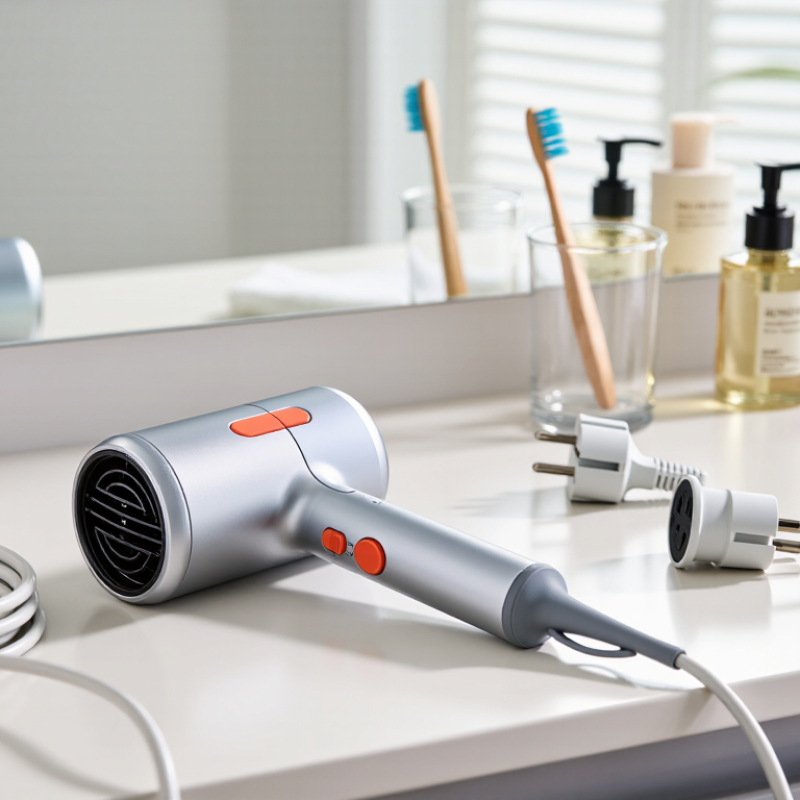
China Best Dual Voltage Hair Dryer for International Travel

Dual-Voltage Basics: 100–240 V and 50/60 Hz Compatibility

Dual-voltage basics matter more than a dryer’s travel-friendly shape. Check the rating label on the handle or body. It should state 100–240 V and 50/60 Hz for broad compatibility. The voltage range means the dryer can operate on common lower- and higher-voltage supplies. The frequency rating confirms support for both 50 Hz and 60 Hz power. Small detail. Check twice.

Tips: Some dryers have a manual voltage switch. Set it to match the outlet before plugging in, and follow the instruction manual. A plug adapter changes the plug shape; it does not convert voltage. If the label lists only one voltage or omits frequency details, don’t guess. Ask the manufacturer or choose a clearly rated alternative.

Even with a 100–240 V rating, check the dryer’s wattage and the accommodation’s outlet limits. High heat can trip a small bathroom circuit, especially when other appliances are running. Keep the dryer away from sinks, and use it with dry hands. That tiny label is easy to overlook, even when you know to check. It is a small step, but it can prevent a frustrating start to a trip.

Power and Performance: Comparing Travel Dryer Wattage and Airflow

A dual-voltage dryer is only as useful as its heat and airflow balance. The U.S. Department of Energy’s appliance wattage guidance places common hair dryers around 1,200–1,875 watts. That range describes electrical input, not drying speed. Airflow, nozzle shape, and heat control also matter. A dryer pushing a steady stream can dry roots faster than a hotter unit with weak airflow. Yet airflow figures are not always measured or presented in a consistent way, so compare the manufacturer’s stated settings cautiously. A compact dryer may feel powerful in a small hotel bathroom, then struggle with thick, damp hair.

Tips: Check the voltage and wattage printed on the dryer before packing. Dual-voltage models may require a manual switch; confirm its position before plugging in. At lower voltage, some dryers deliver less heat or power. Test a low-heat setting first, and keep the intake clear of towels. Small detail. It matters.

For a fair comparison, look for adjustable heat and speed, then assess how quickly the dryer moves air without overheating the hair. Wattage alone can mislead. The DOE figures cover a broad range, not a promise of salon-like performance or a direct airflow rating. I would treat any “fast drying” claim as a starting point, not proof. A simple home test helps: time how long a similar section takes to dry on the same setting, and note whether the ends feel overly hot.

Plug Compatibility: IEC 60083 Types and Regional Outlet Standards

China Best Dual Voltage Hair Dryer for International Travel

Plug Compatibility: IEC 60083 Types and Regional Outlet Standards

IEC 60083 describes household plug and socket systems used across different countries; it does not establish one universal travel outlet. A Chinese hair dryer may have a plug that fits some sockets but not others. Mainland China commonly uses Type A, C, and I outlets, while many destinations use different configurations. The IEC type alone does not confirm a plug will fit every socket in a region. Check your destination’s outlet standard before packing.

UN Tourism reported about 1.4 billion international tourist arrivals in 2024, underscoring how often travelers cross between electrical systems. A plug adapter changes the physical connection; it does not change voltage. Confirm that the dryer’s label supports the destination’s voltage, such as 100–240 V, and check whether it needs a manual voltage switch.

I nearly overlooked that small switch once. Easy mistake.

Tips

Match the plug shape to the socket, then verify voltage separately. A compact adapter may wobble in a loose wall outlet, so test the fit before use. If the dryer’s label is unclear, do not assume “dual voltage” covers every regional supply. Room for doubt is useful.

Safety Standards: IEC 60335-2-23 for Hair-Care Appliances

China Best Dual Voltage Hair Dryer for International Travel

International travelers need more than a compact handle. UN Tourism’s World Tourism Barometer reported about 1.4 billion international tourist arrivals in 2024, nearly 99% of 2019 levels. For frequent travelers, electrical safety deserves attention. IEC 60335-2-23 sets particular safety requirements for appliances such as hair dryers and works alongside the general requirements in IEC 60335-1. It addresses hazards associated with hair-care appliances, including electrical and thermal risks. The standard is a useful benchmark, not a promise that every product is safe in every situation.

Check the appliance’s rating label for its supported voltage range, such as 100–240 V, and confirm the voltage at your destination. A plug adapter changes plug shape, not voltage. That detail is easy to miss. Dual-voltage operation also does not replace safeguards required by the applicable safety standard. Before buying, look for model-specific conformity information and clear operating instructions; a vague “travel safe” claim tells you little. Keep the air inlet clear, place the dryer on a dry surface, and avoid using it near water. One practical point can still feel inconvenient: travelers must check both voltage and plug compatibility, every time.

China Best Dual Voltage Hair Dryer for International Travel - Safety Standards: IEC 60335-2-23 for Hair-Care Appliances

Evaluation Dimension Verified Fact or Specification to Check International Travel Guidance
Safety-standard scope IEC 60335-2-23 sets particular safety requirements for appliances for skin or hair care and is used together with IEC 60335-1, the general requirements for household and similar electrical appliances. Check the product’s documentation for the applicable standard and edition. Standards compliance should be supported by appropriate conformity documentation; a claim on a listing alone does not establish compliance.
Rated input voltage “Dual voltage” is not one universal specification. Hair dryers may be designed for selectable or automatic operation across stated voltage ranges, commonly around 100–120 V and 220–240 V. The exact permitted range is product-specific. Read the rating plate and manual before use. The destination supply must fall within the dryer’s stated input range.
Voltage selection Some models require a manual voltage selector; others detect the supply automatically. The switching method and supported voltages must be confirmed in the manufacturer’s instructions. If manual selection is required, set it correctly before plugging in. Do not assume a dryer is dual voltage based only on its travel-oriented appearance or packaging.
Plug adapter versus voltage converter A plug adapter changes plug shape; it does not convert the electrical supply voltage. Use a suitable plug adapter only when the dryer’s rated voltage already matches the destination supply. A voltage converter is a separate device and must be appropriately rated for the dryer’s electrical load.
Frequency and power rating Permitted frequency and wattage depend on the individual dryer. The rating plate or instruction manual is the authoritative source for its input requirements. Check voltage, frequency, and wattage against the destination supply and any converter’s rating. Do not infer these values from another model.
Overheating and airflow Hair dryers generate heat and require unobstructed airflow during operation. Safety instructions commonly warn against covering air inlets or outlets and using a dryer with a blocked filter. Keep the intake and outlet clear, follow the cleaning instructions, and stop use if the appliance overheats or airflow becomes restricted.
Bathroom use Electrical safety rules for bathrooms and wet locations vary by country and installation. A hair dryer should be kept away from water and used only as permitted by its instructions and local rules. Do not handle the appliance with wet hands or use it where it could fall into water. Follow local requirements for bathroom outlets and residual-current protection.
Travel-ready product checks Useful checks include a clearly marked input rating, understandable voltage-selection instructions, an intact cord and plug, and safety documentation applicable to the destination market. Confirm these details before purchase and inspect the appliance before each trip. Do not use a damaged cord, plug, housing, or voltage selector.

Selection note: There is no single “best” specification for every destination. Choose a dryer whose stated voltage, frequency, plug arrangement, and safety documentation meet the requirements of the countries where it will be used.

Choosing a China-Made Dryer: Voltage, Weight, Settings, and Certifications

China Best Dual Voltage Hair Dryer for International Travel
Choosing a China-Made Dryer: Voltage, Weight, Settings, and Certifications

UN Tourism reported about 1.4 billion international tourist arrivals in 2024, near 99% of 2019 levels. That travel volume makes compact, compatible appliances useful. Check the dryer’s voltage label, not just its packaging. A dual-voltage model should state its supported ranges, commonly 100–120 V and 220–240 V. Confirm whether switching is automatic or requires a selector. A plug adapter changes the plug shape; it does not convert voltage. I admit, that detail is easy to miss.

Weight matters when every item shares a small carry-on. Compare the dryer’s weight with its cord and concentrator attached. Look for two or three heat settings and a cool-air option. Lower heat can help with fine hair, while a concentrator directs airflow in a cramped hotel bathroom. Check the rated wattage at both voltage ranges. Some models deliver less power on lower-voltage settings, so drying may take longer. Test the controls before packing.

For safety, review the manual, rating label, and test documentation. IEC 60335-2-23 covers safety requirements for appliances used for skin or hair care; ask whether relevant testing applies to the exact model. Destination-market certification requirements can differ, so verify them with the importer or retailer. A printed mark alone is not enough. Check the model number matches the documents. I still check twice.

FAQS

Does a plug adapter convert voltage?

No. It only changes the plug shape. Check the dryer’s rating label and destination voltage separately.

Will a Chinese plug fit every international outlet?

No. China commonly uses Type A, C, and I outlets, but socket shapes vary by destination. Check before packing.

What voltage range should a travel dryer support?

Look for a clearly stated range, such as 100–240 V. Confirm the destination’s supply matches it.

Do all dual-voltage dryers switch automatically?

No. Some require a manual selector. I nearly missed that switch once.

Can drying take longer at a lower voltage?

Yes. Some dryers produce less power on lower-voltage settings. Check the wattage listed for each range.

What safety details should I check?

Read the manual and rating label. IEC 60335-2-23 covers safety requirements for hair-care appliances. Match any test documents to the exact model.

What features are useful in a small hotel bathroom?

Two or three heat settings, cool air, and a concentrator can help. Keep the air inlet clear.

What should I check before using an adapter?

Test its fit in the outlet. A compact adapter may wobble in a loose socket. Stop if the connection feels unstable.

Conclusion

Choosing a China-made dual-voltage hair dryer for international travel starts with checking its electrical compatibility. A model rated for 100–240 V and 50/60 Hz can work across many power systems, but travelers should confirm the rating printed on the appliance. Dual voltage does not guarantee that the plug will fit every outlet, so check the plug type and regional outlet standard; an appropriate travel adapter may be needed.

Compare wattage and airflow to balance drying performance with portability, since higher power can affect both heat output and energy use. Look for practical features such as a lightweight design, adjustable heat and speed settings, and clear operating instructions. An International Travel Hair Dryer Dual Voltage should also have suitable safety protections and verifiable documentation, including conformity with the relevant IEC 60335-2-23 safety requirements for hair-care appliances. Before buying, review the voltage range, frequency, plug, weight, settings, and certification details together to find a dryer suited to your travel needs.


Liam

Liam

Liam is a dedicated marketing professional with a profound expertise in the industry, where he excels at highlighting the unique advantages of our core products. With a keen understanding of market trends and consumer needs, Liam frequently updates our company’s professional blog, providing......